No two drivers are the same. A teenager who drives to high school and works part time at a local store has different risks than a sales representative who spends four hours a day on the highway. A retiree who drives to the grocery store once a week has different needs than a parent who shuttles three children to school, sports, and activities every day. Yet most drivers buy the same generic insurance policy as everyone else, overpaying for coverage they do not need or underinsuring risks they face every day.
Your driving habits should determine your insurance coverage. The way you use your car, how many miles you drive, where you drive, when you drive, and who drives with you all affect your risk profile. By matching your coverage to your actual driving habits, you can save money on coverage you do not need while strengthening protection where you need it most.
This article will help you choose the right coverage based on your specific driving habits. You will learn how to analyze your own driving patterns, which coverages matter most for different types of drivers, and how to avoid paying for protection that does not fit your lifestyle. By the end, you will have a customized roadmap for building a policy that fits you perfectly.
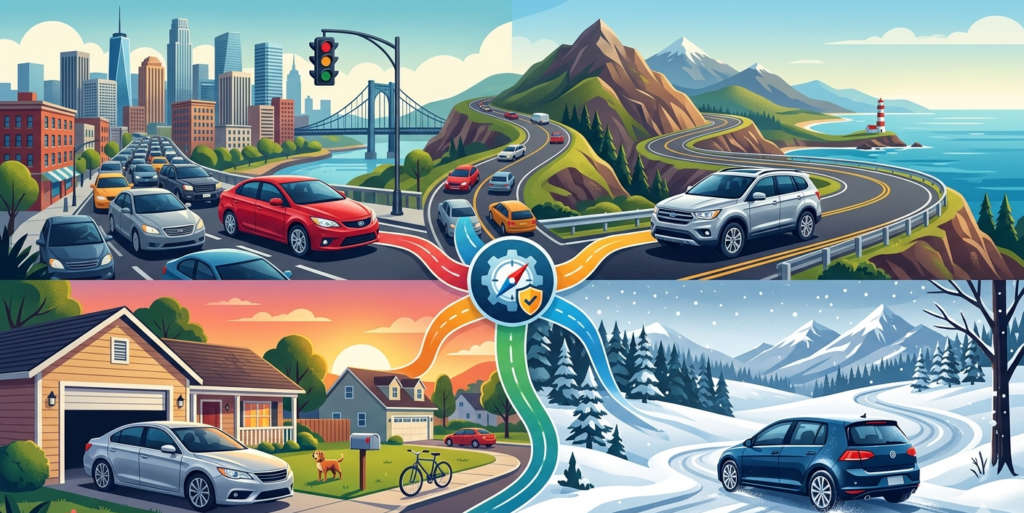
Why Your Driving Habits Matter More Than You Think
Most drivers assume that car insurance is based primarily on their age, their driving record, and the car they drive. Those factors are important, but your actual driving habits are equally critical. The way you use your car directly affects your risk of having an accident, and your insurance should reflect that risk.
A driver who commutes fifty miles each way on a crowded highway during rush hour has a much higher accident risk than a driver who works from home and drives three miles to the grocery store once a week. The commuter spends more time on the road, encounters more traffic, faces more weather conditions, and has more opportunities for something to go wrong. That driver needs stronger coverage.
A driver who frequently transports children or elderly parents has different liability exposure than a driver who always drives alone. If you have passengers in your car, you are responsible for their safety. If you cause an accident and injure your passengers, your liability coverage must cover their medical bills.
A driver who lives in a city with high rates of uninsured drivers needs different uninsured motorist protection than a driver in a rural area where almost everyone is insured. A driver who parks on the street every night needs comprehensive coverage more than a driver with a secure garage.
Here is a table showing how different driving habits affect your insurance needs.
| Driving Habit | Risk Profile | Coverage Implication |
|---|---|---|
| Long commute (50+ miles/day) | High accident risk | Higher liability limits, collision coverage |
| Short commute (under 10 miles/day) | Moderate accident risk | Standard coverage |
| Work from home | Low accident risk | Lower premiums, low mileage discount |
| Night driving | Higher risk of impaired drivers | Higher liability, UM/UIM |
| Rural driving | Deer strikes, longer emergency response | Comprehensive coverage, roadside assistance |
| Urban driving | More traffic, more uninsured drivers | UM/UIM, lower deductibles |
| Highway driving | Higher speed accidents | Higher liability limits |
| Driving with children | Higher passenger liability | Higher liability limits, MedPay |
| Driving with elderly passengers | Higher medical exposure | Higher MedPay limits |
Understanding your own driving habits is the first step to choosing the right coverage. Take five minutes to think about how you actually use your car. Then read the sections below that match your profile.
The Daily Commuter: Long Miles, High Risk
If you drive to work every day, especially if you have a long commute, you are in the highest risk category of drivers. You spend more time on the road than most people, which means you have more opportunities for accidents. You also face rush hour traffic, aggressive drivers, and fatigue from long hours behind the wheel.
For daily commuters, the most important coverages are liability at higher limits, uninsured motorist coverage, collision coverage, and rental reimbursement. Your car is essential to your ability to work. If it is damaged or destroyed, you need to get back on the road quickly.
Here is the recommended coverage package for a daily commuter.
| Coverage | Recommended Limit | Why |
|---|---|---|
| Liability | $100k/$300k minimum, $250k/$500k preferred | Higher accident risk requires higher protection |
| Property damage | $50k – $100k | Highway accidents can involve multiple vehicles |
| UM/UIM | Same as liability | Rush hour traffic includes many uninsured drivers |
| MedPay | $5,000 – $10,000 | Covers deductibles from health insurance |
| Comprehensive | $500 deductible | Protects against weather, theft, animal strikes |
| Collision | $500 deductible | Essential for getting back on the road |
| Rental reimbursement | $40/day for 30 days | Need a car to get to work while yours is repaired |
| Roadside assistance | Yes | Breakdowns happen, especially on long commutes |
| Gap insurance | If financed | New cars depreciate fast with high mileage |
If your commute is longer than fifty miles each way, consider increasing your liability limits to two hundred fifty thousand dollars per person and five hundred thousand dollars per accident. The extra cost is small compared to the increased risk.
Daily commuters should also take advantage of telematics programs like Progressive Snapshot or State Farm Drive Safe and Save. These programs monitor your driving habits and offer discounts for safe driving. If you are a careful commuter, you can save ten to forty percent on your premium simply by proving that you drive safely despite the high mileage.
The Work From Home Driver: Low Mileage, Different Risks
If you work from home, your driving habits have changed dramatically. You no longer have a daily commute. You might drive only a few thousand miles per year, mostly for errands, appointments, and social activities. Your accident risk is much lower than a daily commuter, but you still face risks when you do drive.
For work from home drivers, the most important thing is to update your annual mileage with your insurer. Many work from home drivers are still paying premiums based on their old commuting mileage. Lower mileage means lower risk, which means lower premiums. If you have not updated your mileage recently, you are likely overpaying.
Here is the recommended coverage package for a work from home driver.
| Coverage | Recommended Limit | Why |
|---|---|---|
| Liability | $100k/$300k | Still need protection when you drive |
| Property damage | $50k | Adequate for most accidents |
| UM/UIM | $100k/$300k | Protects you when you are on the road |
| MedPay | $5,000 | Covers medical deductibles |
| Comprehensive | $500 deductible or higher | Car is parked more, at risk of theft/weather |
| Collision | Consider dropping if car is older | You drive less, so lower accident risk |
| Rental reimbursement | Maybe, but lower priority | You can work from home without a car |
| Roadside assistance | Yes, especially for older cars | You drive less, but breakdowns still happen |
| Low mileage discount | Ask for it | You should be paying less |
The biggest savings for work from home drivers come from low mileage discounts. Most insurers offer discounts for drivers who drive less than seven thousand five hundred or ten thousand miles per year. If you drive less than five thousand miles per year, you may qualify for an even larger discount. Some insurers, like Nationwide with SmartMiles, offer per mile insurance that can be very cheap for low mileage drivers.
If you have a second car that is rarely driven, consider dropping collision coverage on that car. The annual premium may be higher than the car’s value. Also consider raising your deductibles. Since you drive less, your chance of an accident is lower. A higher deductible saves you money every month with little additional risk.
The City Driver: Traffic, Theft, and Uninsured Drivers
City driving presents a unique set of risks. You face heavy traffic, frequent stops, aggressive drivers, and the constant possibility of minor fender benders. You also face higher rates of theft, vandalism, and uninsured drivers. Parking is often on the street or in public garages, which increases your exposure to comprehensive claims.
For city drivers, uninsured motorist coverage, comprehensive coverage, and lower deductibles are the priorities. The risk of being hit by an uninsured driver is much higher in cities. The risk of theft or vandalism is also higher. And minor accidents are more frequent, so lower deductibles make sense because you are more likely to file claims.
Here is the recommended coverage package for a city driver.
| Coverage | Recommended Limit | Why |
|---|---|---|
| Liability | $100k/$300k | City accidents can be expensive |
| Property damage | $50k – $100k | Multiple cars can be involved |
| UM/UIM | Same as liability, essential | High rate of uninsured drivers in cities |
| MedPay | $5,000 – $10,000 | Covers medical bills from frequent accidents |
| Comprehensive | $250 deductible | High risk of theft and vandalism |
| Collision | $250 – $500 deductible | Frequent minor accidents |
| Rental reimbursement | $30 – $40/day | Need car to get around the city |
| Roadside assistance | Yes | City breakdowns are stressful |
| Gap insurance | If financed | Still important |
If you live in a city with very high uninsured driver rates, like Miami, New Orleans, or Memphis, consider carrying even higher UM/UIM limits. One hundred thousand dollars per person may not be enough if you are seriously injured by an uninsured driver in an expensive city. Two hundred fifty thousand dollars is better.
Zero deductible glass coverage is especially valuable for city drivers. City streets have more debris, more construction, and more risk of broken windshields. For five to fifteen dollars per year, zero deductible glass coverage saves you hundreds of dollars when a rock cracks your windshield.
Parking in a garage rather than on the street can lower your comprehensive premium. If you have access to secure parking, tell your insurer. The discount may be small, but every discount helps.
The Rural Driver: Deer, Distance, and Isolation
Rural driving is different from both city and suburban driving. You face fewer cars but higher speeds, longer distances to hospitals, and the constant risk of hitting deer or other animals. Emergency services may take longer to reach you. Towing a broken car can be expensive because you are far from repair shops.
For rural drivers, comprehensive coverage for animal strikes is essential. Roadside assistance with adequate towing limits is also critical. Liability limits should still be strong because high speed rural accidents can be severe.
Here is the recommended coverage package for a rural driver.
| Coverage | Recommended Limit | Why |
|---|---|---|
| Liability | $100k/$300k | High speed accidents are severe |
| Property damage | $50k | Adequate for most rural accidents |
| UM/UIM | $100k/$300k | Fewer uninsured drivers, but still need protection |
| MedPay | $5,000 | Hospital may be far away, need immediate coverage |
| Comprehensive | $250 – $500 deductible | Essential for deer strikes |
| Collision | $500 deductible | Still needed for crashes |
| Rental reimbursement | $30/day, but lower priority | Fewer rental options in rural areas |
| Roadside assistance | Yes, with higher towing limits | Towing can be 50+ miles to nearest shop |
| Gap insurance | If financed | Still important |
The most important coverage for rural drivers is comprehensive, specifically for animal strikes. Hitting a deer is not a matter of if but when for many rural drivers. A deer strike can cause five thousand to ten thousand dollars in damage. Comprehensive coverage with a reasonable deductible is essential.
If you drive in areas with large animals like elk or moose, consider carrying even higher comprehensive limits. A moose strike can be catastrophic, often totaling the vehicle and causing severe injuries. Your insurance needs to be adequate for these risks.
For roadside assistance, make sure your towing limit is high enough to cover a long tow. The nearest repair shop might be fifty or even one hundred miles away. A tow that distance can cost two hundred to five hundred dollars. Some roadside assistance plans cover only five or ten miles. Choose a plan with at least fifty miles of towing coverage, or a dollar limit of one hundred fifty dollars or more.
The Parent Driver: Passengers Change Everything
If you regularly drive with children or other passengers, your liability exposure increases significantly. If you cause an accident and injure your passengers, your liability coverage must pay their medical bills. Children may have life long injuries that require ongoing care. The potential judgment against you could be millions of dollars.
For parent drivers, higher liability limits are essential. Medical payments coverage is also important because it pays for your passengers’ medical bills quickly, regardless of fault. If you drive a minivan or SUV that carries many passengers, consider increasing both your liability and MedPay limits.
Here is the recommended coverage package for a parent driver.
| Coverage | Recommended Limit | Why |
|---|---|---|
| Liability | $250k/$500k minimum | Passengers increase liability exposure |
| Property damage | $100k | You may be distracted and cause more damage |
| UM/UIM | Same as liability | Protects you and your passengers |
| MedPay | $10,000 – $25,000 | Covers passengers’ medical bills quickly |
| Comprehensive | $500 deductible | Protects family car |
| Collision | $500 deductible | Protects family car |
| Rental reimbursement | $40 – $50/day | Need a family-sized vehicle |
| Roadside assistance | Yes | Children should not be stranded |
| Gap insurance | If financed | Still important |
If you drive a large vehicle like a minivan or SUV that carries many passengers, consider an umbrella policy. An umbrella policy provides an additional one million dollars or more of liability coverage. The cost is typically one hundred fifty to three hundred dollars per year. For parents, this is excellent value.
Medical payments coverage is especially important for parent drivers. If your child is injured in an accident, MedPay pays their medical bills immediately. You do not have to wait for fault determination or deal with the other driver’s insurance. This can be critical for getting your child the care they need quickly.
If your children are teenagers who drive your car, make sure they are listed as named drivers on your policy. Do not assume they are covered. An unlisted teen driver is a massive coverage gap that could leave you with no coverage after an accident.
The Night Driver: Darkness, Fatigue, and Impaired Drivers
Driving at night is statistically much more dangerous than driving during the day. Visibility is reduced, fatigue affects reaction times, and impaired drivers are more common on the roads. If you regularly drive at night for work or other reasons, your insurance needs reflect this increased risk.
For night drivers, higher liability limits and uninsured motorist coverage are priorities. The risk of being hit by an impaired or uninsured driver is higher at night. Medical payments coverage is also important because injuries from nighttime accidents can be severe.
Here is the recommended coverage package for a night driver.
| Coverage | Recommended Limit | Why |
|---|---|---|
| Liability | $250k/$500k | Night accidents are often more severe |
| Property damage | $100k | High speed night accidents cause more damage |
| UM/UIM | Same as liability | More uninsured and impaired drivers at night |
| MedPay | $10,000 | Night injuries can be severe |
| Comprehensive | $500 deductible | Standard protection |
| Collision | $500 deductible | Standard protection |
| Rental reimbursement | $40/day | Need transportation while car is repaired |
| Roadside assistance | Yes | Breakdowns at night are more dangerous |
| Gap insurance | If financed | Still important |
If you regularly drive late at night, especially between midnight and 4 AM when impaired driving is most common, consider telematics programs that offer discounts for safe driving. These programs track the time of day you drive. If you drive safely during late hours, you may still qualify for discounts. However, some telematics programs penalize night driving regardless of safety. Read the terms carefully.
Consider also your personal safety. Roadside assistance is more valuable at night than during the day. If your car breaks down at 2 AM, you do not want to be stranded. Make sure your roadside assistance includes 24/7 service with reasonable response times.
The High Mileage Driver: Wear and Tear, More Claims
If you drive more than fifteen thousand miles per year, you are a high mileage driver. This includes sales representatives, delivery drivers, rideshare drivers, and long distance commuters. Your car experiences more wear and tear, and your accident risk is higher simply because you spend more time on the road.
For high mileage drivers, collision coverage, rental reimbursement, and roadside assistance are essential. Your car is your livelihood in many cases. You cannot afford to be without it. You should also consider mechanical breakdown insurance, which covers repairs not caused by accidents.
Here is the recommended coverage package for a high mileage driver.
| Coverage | Recommended Limit | Why |
|---|---|---|
| Liability | $250k/$500k | Higher exposure requires higher limits |
| Property damage | $100k | More driving means more potential for damage |
| UM/UIM | Same as liability | More exposure to uninsured drivers |
| MedPay | $10,000 | More accidents mean more medical needs |
| Comprehensive | $250 – $500 deductible | Car is always exposed to risk |
| Collision | $250 – $500 deductible | Essential, you cannot be without a car |
| Rental reimbursement | $50/day for 30 days | You need a car immediately |
| Roadside assistance | Yes, with high limits | Breakdowns are more likely |
| Gap insurance | If financed | New cars depreciate fast with high mileage |
| Mechanical breakdown | Consider | High mileage means more repairs |
If you drive more than twenty thousand miles per year, consider a new car more frequently. High mileage cars lose value quickly. Gap insurance is essential if you finance a new car with high mileage expectations. Without gap insurance, you could be upside down on your loan within a year.
If you use your car for ridesharing or delivery services, you need a rideshare endorsement or a commercial policy. Personal auto insurance does not cover you while you are driving for Uber, Lyft, DoorDash, or similar services. This is a massive coverage gap that every high mileage driver should address immediately.
The Low Mileage Driver: Pay Less, But Stay Protected
If you drive less than seven thousand five hundred miles per year, you are a low mileage driver. This includes retirees, work from home professionals, students who live on campus, and families with multiple cars who use one car primarily. Low mileage drivers should pay less for insurance because their risk is lower.
The most important thing for low mileage drivers is to claim the low mileage discount. Many insurers do not apply this discount automatically. You must tell them your annual mileage. If you have not updated your mileage recently, you are likely overpaying.
Here is the recommended coverage package for a low mileage driver.
| Coverage | Recommended Limit | Why |
|---|---|---|
| Liability | $100k/$300k | Still need protection when you drive |
| Property damage | $50k | Adequate for occasional driving |
| UM/UIM | $100k/$300k | Still need protection |
| MedPay | $5,000 | Covers medical deductibles |
| Comprehensive | $500 – $1,000 deductible | Car is parked more, but still at risk |
| Collision | Consider dropping if car is older | Lower accident risk means self-insure |
| Rental reimbursement | Optional, lower priority | You drive less, may not need rental |
| Roadside assistance | Yes, but lower priority | Still valuable |
| Low mileage discount | Ask for it | You should be paying less |
Some insurers offer per mile insurance policies specifically for low mileage drivers. Metromile and Nationwide SmartMiles charge a low daily base rate plus a few cents per mile. For drivers under five thousand miles per year, these policies can be much cheaper than traditional insurance. Compare a per mile policy to a traditional policy with a low mileage discount to see which is better for you.
If you have a second car that is rarely driven, consider dropping collision coverage on that car. Also consider raising your deductibles. Since you drive less, your chance of an accident is lower. A higher deductible saves you money every month with little additional risk.
The Teen Driver: High Risk, High Need
Teen drivers are the highest risk group, and their insurance needs reflect that. If you are a teen driver or a parent of a teen driver, you need strong coverage across the board. Liability limits should be high. Collision and comprehensive are essential. And discounts for good grades and defensive driving can help offset the high cost.
Here is the recommended coverage package for a teen driver.
| Coverage | Recommended Limit | Why |
|---|---|---|
| Liability | $250k/$500k minimum | Teens have higher accident rates |
| Property damage | $100k | Teen accidents can be severe |
| UM/UIM | Same as liability | Protects teen and passengers |
| MedPay | $10,000 | Covers teen and passengers |
| Comprehensive | $500 deductible | Protects the car |
| Collision | $500 deductible | Essential for teen drivers |
| Rental reimbursement | $30 – $40/day | Still needed |
| Roadside assistance | Yes | Teens should not be stranded |
| Gap insurance | If financed | New cars driven by teens depreciate fast |
The best way to insure a teen driver is to add them to a parent’s policy rather than buying a separate policy. Adding a teen to an existing policy typically costs one thousand to two thousand dollars per year. A separate policy for a teen could cost three thousand to five thousand dollars or more.
Teen drivers should take advantage of every available discount. The good student discount can save up to twenty five percent for a B average or higher. The defensive driving discount can save five to fifteen percent. Some insurers offer discounts for completing driver’s education or for using telematics programs that monitor driving habits.
If your teen will not be driving your car, ask about a named driver exclusion. This form states that your teen is explicitly excluded from coverage. You do not pay for them on your policy, but they cannot drive your car for any reason. This is only appropriate if your teen has their own car and their own insurance, or if they genuinely will never drive.
The Senior Driver: Experience but New Risks
Senior drivers have years of experience, which lowers their risk compared to younger drivers. However, age related changes in vision, reaction time, and cognitive function can increase accident risk. Seniors also face higher medical costs after accidents, so strong medical coverage is important.
Here is the recommended coverage package for a senior driver.
| Coverage | Recommended Limit | Why |
|---|---|---|
| Liability | $100k/$300k | Standard protection |
| Property damage | $50k | Adequate for most accidents |
| UM/UIM | $100k/$300k | Protects against uninsured drivers |
| MedPay | $10,000 – $25,000 | Seniors have higher medical costs |
| Comprehensive | $500 deductible | Protects the car |
| Collision | Consider dropping if car is older | May not need if car value is low |
| Rental reimbursement | Optional | May have second car or family help |
| Roadside assistance | Yes | Seniors should not be stranded |
| Mature driver discount | Ask for it | Many insurers offer this |
Seniors should ask about the mature driver discount. Many insurers offer discounts to drivers over fifty five or sixty who complete an approved defensive driving course. The course can be taken online and costs twenty five to fifty dollars. The discount typically lasts for three years.
If you are a senior who drives less than average, make sure you are claiming the low mileage discount. Many seniors drive much less after retirement. If you have not updated your mileage, you are likely overpaying.
Consider whether you still need collision coverage if your car is older and you drive less. Dropping collision coverage can save hundreds of dollars per year. But only do this if you have the savings to replace your car if it is totaled.
The Bottom Line on Choosing Coverage for Your Driving Habits
Your driving habits should determine your insurance coverage. A daily commuter needs different coverage than a work from home driver. A city driver needs different coverage than a rural driver. A parent needs different coverage than a single driver. By matching your coverage to your actual habits, you pay for what you need and skip what you do not.
Start by honestly assessing your driving habits. How many miles do you drive per year? When do you drive? Where do you drive? Do you carry passengers? Do you park on the street or in a garage? Do you drive for work or just for errands? Write down your answers.
Then use the recommendations in this article to build your policy. Start with liability at one hundred thousand dollars per person and three hundred thousand dollars per accident. This is the foundation for almost every driver. Adjust higher if you have significant assets, carry passengers frequently, or drive in high risk conditions.
Add uninsured and underinsured motorist coverage at the same limits as your liability. Add medical payments coverage based on your health insurance deductible and your passenger situation. Add comprehensive and collision based on your car’s value and your ability to self insure. Add rental reimbursement if you need a car daily. Add roadside assistance if you do not have AAA.
Finally, claim every discount you qualify for. Low mileage discounts for driving less. Good student discounts for students. Defensive driving discounts for completing a course. Mature driver discounts for seniors. Bundling discounts for combining policies. Pay in full discounts for paying annually. Each discount may be small, but together they can save you hundreds of dollars per year.
Your driving habits are unique. Your insurance should be too.