You have been paying your car insurance premiums faithfully for years. You have never missed a payment. You have a clean driving record. Then one day, you are in an accident. You file a claim, expecting your insurer to take care of everything. Weeks later, your claim is denied, or your settlement is much lower than you expected. You are frustrated and confused. What went wrong?
The answer is almost always that you made a mistake somewhere in the claims process. Insurance claims are not complicated, but they have rules. Drivers who understand those rules get paid quickly and fairly. Drivers who do not make mistakes that cost them time, money, and peace of mind.
This article will expose the most common car insurance claim mistakes drivers make. You will learn what not to do after an accident, how to avoid giving the insurer reasons to deny your claim, and what to say and what not to say to claims adjusters. By the end, you will be able to avoid the mistakes that cost other drivers thousands of dollars.
Mistake One: Leaving the Scene of the Accident
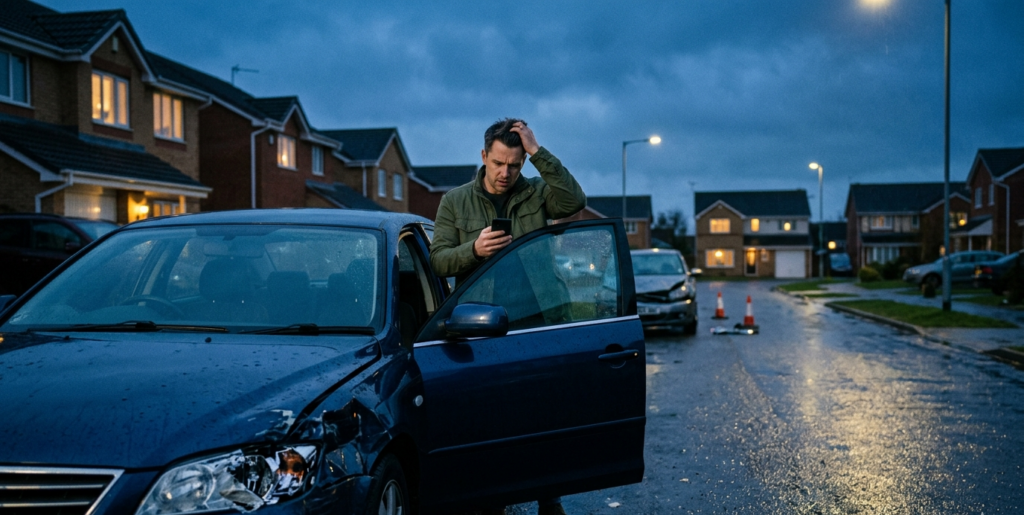
One of the most serious mistakes a driver can make is leaving the scene of an accident before exchanging information and reporting to police. This is not just a claims mistake. It is a legal offense in every state. Hit and run can result in criminal charges, license suspension, and significant fines.
Even if the accident is minor, even if you are not at fault, even if you panic, do not leave. Stop your car. Check for injuries. Exchange information. Call the police if there is damage or injury. Leaving the scene will almost certainly result in your claim being denied. Your insurer will likely cancel your policy. You may face criminal prosecution.
Here is a table showing the consequences of leaving the scene.
| Accident Type | Legal Consequence | Insurance Consequence |
|---|---|---|
| Minor fender bender, no injuries | Misdemeanor, fines up to $1,000 | Claim denied, policy canceled |
| Accident with injuries | Felony, jail time possible | Claim denied, policy canceled |
| Accident with fatality | Serious felony, years in prison | Claim denied, policy canceled |
If you leave the scene, your only option is to return immediately or contact police as soon as possible. Explain why you left. Provide your information. The sooner you correct your mistake, the better your chances of mitigating the consequences. But the best strategy is simple. Never leave.
Mistake Two: Admitting Fault at the Scene
After an accident, emotions are high. You may feel guilty, even if the accident was not your fault. You may say something like “I am so sorry” or “I did not see you” or “It was my fault.” These seemingly innocent statements can be used against you by the other driver’s insurance company.
Do not apologize. Do not say “I did not see you.” Do not say “I am at fault.” Do not speculate about what happened. Do not guess about your speed or whether you could have done something differently. The only people who should determine fault are the police and the insurance adjusters.
Here is a table of things to say and not to say at the accident scene.
| Do Not Say | Why Not | What to Say Instead |
|---|---|---|
| “I’m sorry” | Implies fault | “Are you okay?” |
| “I didn’t see you” | Implies you were not paying attention | “What happened?” |
| “It was my fault” | Direct admission of fault | “Let’s exchange information” |
| “I was going about 40” | May be used against you | “I do not know my exact speed” |
| “I should have braked sooner” | Implies fault | Stay silent or say “I do not know” |
| “This is my first accident” | Not relevant | Stay silent |
If the other driver says “It was my fault,” do not celebrate or argue. Simply note what they said. Tell the police officer what the other driver said. But do not engage in a discussion about fault at the scene. Exchange information, take photos, and let the professionals determine fault.
Mistake Three: Not Calling the Police
Many drivers believe that police only need to be called if there are injuries or if the damage is severe. This is a mistake. Even in a minor fender bender, a police report is valuable evidence for your insurance claim.
Here is a table showing when you should call the police after an accident.
| Situation | Call Police? | Why |
|---|---|---|
| Any injury | Yes | Required by law |
| Any fatality | Yes | Required by law |
| Significant damage (over $1,000) | Yes | Police report helps claim |
| Disputed fault | Yes | Officer documents scene |
| Other driver uncooperative | Yes | Officer can compel information |
| Other driver has no insurance | Yes | Officer documents violation |
| Minor fender bender, both agree on fault | Maybe | Not required but helpful |
Even if police do not come to the scene, you may be able to file a police report later at the station. Do this as soon as possible. A police report created days after the accident is less valuable than one created at the scene, but it is better than nothing.
The police report is not the final word on fault. Insurance adjusters make their own determinations. But a police report carries significant weight. If the officer notes that the other driver was at fault, your claim will be much easier.
Mistake Four: Not Documenting the Accident Scene
In the age of smartphones, there is no excuse for not documenting an accident scene. Yet many drivers fail to take photos and videos, or they take poor quality images that do not help their claim.
Here is a table of what to document at the accident scene.
| What to Document | How | Why |
|---|---|---|
| Damage to all vehicles | Photos from multiple angles | Shows severity of impact |
| License plates | Photos | Identifies other vehicles |
| Vehicle positions | Photos before moving | Shows how accident happened |
| Skid marks | Photos | Indicates speed and braking |
| Traffic signs and lights | Photos | Shows right of way |
| Road conditions | Photos | Shows weather, ice, debris |
| Injuries | Photos if visible | Documents physical harm |
| Witnesses | Name and phone number | Provides independent accounts |
| Other driver’s information | Written or photo of license | Required for claim |
Take more photos than you think you need. Take photos from far away to show the overall scene. Take close up photos to show specific damage. Take photos of the inside of your car if airbags deployed or items were thrown around.
If you have a dashcam, save the footage immediately. Do not let it be overwritten. Dashcam footage is some of the most powerful evidence you can have. It shows exactly what happened, without bias or memory lapses.
Mistake Five: Delaying Your Claim
Many drivers wait to file their insurance claim. They think they need to get repair estimates first, or they want to see if the other driver will pay directly, or they are simply busy with other things. This is a mistake.
Most insurance policies require you to report claims promptly. The specific time frame varies, but “promptly” usually means within a few days. Some policies require reporting within 24 hours. Others allow up to 30 days. Waiting too long gives the insurer a reason to deny your claim.
Here is a table showing why delay hurts your claim.
| Delay Period | Potential Consequence |
|---|---|
| 24 hours | Usually acceptable |
| 2-3 days | Might be questioned |
| 1 week | Insurer may ask why you waited |
| 2 weeks | Risk of denial |
| 30+ days | High risk of denial |
Even if your policy does not have a specific time limit, delaying your claim makes it harder to investigate. Witnesses forget what they saw. Physical evidence disappears. The other driver’s memory fades. The insurer may argue that the delay prejudiced their ability to investigate.
Call your insurer as soon as you are safely home. Most insurers have 24/7 claims hotlines. You can file a claim from your phone while sitting in your living room. Do not wait.
Mistake Six: Giving a Recorded Statement Without Preparation
After you file a claim, the insurance adjuster will likely ask for a recorded statement. Many drivers agree immediately, thinking they have nothing to hide. This is often a mistake.
A recorded statement is a legal document. Anything you say can be used against you. The adjuster is trained to ask questions that might get you to contradict yourself or admit fault. Even if you are completely honest, you might say something that can be misinterpreted.
Here is a table of what to do and what not to do when giving a recorded statement.
| Do | Do Not |
|---|---|
| Ask to see the questions in writing first | Agree without preparation |
| Take time to think before answering | Answer immediately |
| Say “I do not know” if you are unsure | Guess or speculate |
| Stick to facts you know | Volunteer extra information |
| Request a copy of the recording | Assume it cannot be used against you |
| Consult an attorney if unsure | Sign anything without reading |
You have the right to decline a recorded statement. You can say, “I prefer to provide a written statement instead.” Or you can say, “I would like to speak with an attorney before giving a recorded statement.”
If you do give a recorded statement, prepare beforehand. Write down the facts of the accident. Practice saying them out loud. Keep your answers short and factual. Do not speculate. Do not guess. Do not apologize.
Mistake Seven: Posting About the Accident on Social Media
In the age of social media, many drivers post about everything that happens in their lives. After an accident, the urge to post can be strong. You want to vent. You want to let friends and family know you are okay. You want to share photos of the damage. This is a serious mistake.
Insurance companies monitor social media. They look for posts that contradict your claim. If you post “I feel fine” hours after an accident, they will use that to deny your injury claim. If you post photos of your car that show damage in a different location than you described, they will use that against you.
Here is a table of what not to post on social media after an accident.
| Do Not Post | Why |
|---|---|
| “I’m fine” or “I feel okay” | Contradicts injury claim |
| Photos of damage | May be used to dispute your description |
| Details of the accident | May contradict your statement |
| Comments about fault | May be used against you |
| Your location | Insurer may investigate |
| Anything about the other driver | Could be considered harassment |
The safest approach is to post nothing about the accident on social media. Not a word. Not a photo. Nothing. Wait until your claim is completely settled. Then, if you must post, be careful about what you say.
If you have already posted something, do not delete it. Deleting can be seen as destroying evidence. Instead, save a copy of the post. Then set your profile to private. Do not post anything else about the accident.
Mistake Eight: Accepting the First Settlement Offer
When an insurance adjuster makes a settlement offer, many drivers accept it immediately. They are relieved the process is over. They want their money. This is almost always a mistake.
The first offer is rarely the best offer. Insurance adjusters are trained to start low. They expect you to negotiate. Many drivers leave thousands of dollars on the table by accepting the first offer.
Here is a table showing how negotiation affects settlement amounts.
| Type of Claim | First Offer | Negotiated Settlement | Difference |
|---|---|---|---|
| Minor property damage | $800 | $1,100 | +$300 |
| Moderate property damage | $2,500 | $3,200 | +$700 |
| Major property damage | $6,000 | $7,500 | +$1,500 |
| Minor injury | $1,500 | $2,500 | +$1,000 |
| Moderate injury | $5,000 | $8,000 | +$3,000 |
| Major injury | $15,000 | $25,000 | +$10,000 |
Do not accept the first offer. Instead, say these words. “Thank you for the offer. I need time to review it and will get back to you.” Then gather evidence to support a higher amount. Get a second repair estimate. Get a doctor’s report. Get a diminished value appraisal.
When you counter, provide documentation. Say, “Based on the attached repair estimate from my shop, I am seeking [amount].” Be professional. Be persistent. Do not be rude or threatening. Rude behavior will not help your claim.
If you cannot reach an agreement with the adjuster, escalate to a supervisor. If that fails, consider hiring an attorney or filing a complaint with your state insurance department.
Mistake Nine: Signing a Release Too Early
Before an insurer pays a claim, they will ask you to sign a release. The release says that you accept the settlement amount and that you will not seek any additional money for the same accident. Signing a release too early is a serious mistake.
Once you sign a release, you cannot go back for more money. If you discover later that your injuries are more serious than you thought, or that your car needs additional repairs, you are out of luck.
Here is a table of when it is safe to sign a release and when it is not.
| Situation | Sign Release? | Why |
|---|---|---|
| Minor property damage, repairs complete | Yes | No future claims expected |
| Major property damage, possible hidden damage | No | Wait for full inspection |
| Minor injury, you have fully recovered | Yes | No future medical bills |
| Moderate injury, still in treatment | No | Wait for full recovery |
| Major injury, possible long term effects | No | Consult attorney first |
Do not sign a release until you are certain that all damage has been identified and all injuries have healed. For property damage, wait until the repairs are complete. Hidden damage is common. For injuries, wait until a doctor says you have reached maximum medical improvement.
If you are unsure, consult an attorney. A lawyer can review the release and advise you whether it is fair. The cost of a consultation is usually worth the peace of mind.
Mistake Ten: Not Reading Your Policy Before Filing a Claim
Many drivers never read their insurance policy. They do not know their deductibles, their coverage limits, or their exclusions. Then they file a claim, only to discover that the damage is not covered, or that their deductible is higher than the repair cost.
Here is a table of policy information you should know before filing a claim.
| Information | Why It Matters |
|---|---|
| Deductible amount | Determines if claim is worth filing |
| Coverage limits | Determines maximum payout |
| Exclusions | Determines what is not covered |
| Time limits for reporting | Determines if claim will be accepted |
| Rental reimbursement limit | Determines how much you get for rental |
| Medical payments limit | Determines how much for medical bills |
Read your policy before you need it. Keep a copy in your glove compartment or save it on your phone. Know your deductibles. Know your coverage limits. If something is unclear, call your agent and ask.
If you are considering filing a claim, first check whether the damage exceeds your deductible. If the repair cost is less than your deductible, filing a claim is pointless. You will pay for the repairs yourself, and your rates may increase.
Mistake Eleven: Filing Too Many Small Claims
Some drivers file a claim for every minor incident. A cracked windshield. A small dent. A scratch from a parking lot. This is a mistake. Insurance is for significant losses, not minor maintenance.
Filing multiple small claims tells your insurer that you are a high risk customer. They may increase your rates or even cancel your policy. The cost of the premium increase over several years may far exceed the amount you received from the small claims.
Here is a table showing the true cost of filing a small claim.
| Claim Amount | Deductible | Payout | Premium Increase (3 years) | Net Cost/Benefit |
|---|---|---|---|---|
| $800 | $500 | $300 | $600 | -$300 (you lose) |
| $1,000 | $500 | $500 | $600 | -$100 (you lose) |
| $1,500 | $500 | $1,000 | $600 | +$400 (you gain) |
| $2,000 | $500 | $1,500 | $600 | +$900 (you gain) |
The rule of thumb is to only file a claim if the repair cost is at least three times your deductible. For a five hundred dollar deductible, that means filing only for repairs over one thousand five hundred dollars. For a one thousand dollar deductible, file only for repairs over three thousand dollars.
For smaller amounts, pay out of pocket. You will save money on premiums and keep your claims history clean.
Mistake Twelve: Not Keeping Records
Insurance claims involve paperwork. Estimates, receipts, medical records, police reports, correspondence with adjusters. Many drivers fail to keep organized records. When a dispute arises, they cannot find the document they need.
Here is a table of documents you should keep for every claim.
| Document | Why You Need It |
|---|---|
| Police report | Official record of accident |
| Photos and videos | Evidence of damage and scene |
| Repair estimates | Basis for property damage claim |
| Repair receipts | Proof of payment |
| Medical records | Documentation of injuries |
| Medical bills | Basis for medical claim |
| Rental car receipts | Reimbursement for rental |
| Correspondence with insurer | Record of what was said |
| Settlement agreement | Legal document |
Create a folder for each claim. Put every document in the folder. Save digital copies as well. If you have a dispute, you will have everything you need.
Keep these records even after your claim is settled. Some injuries take years to appear. Some repair problems emerge later. Keep your claim file for at least as long as your state’s statute of limitations for accident claims, typically three to five years.
Real Example: How One Driver Made Multiple Mistakes and Lost $5,000
Let us walk through a real example to see how claims mistakes can cost real money. Meet Robert, a forty year old driver in Florida. He is in a minor accident. The other driver runs a stop sign and hits Robert’s car. The damage is moderate, about three thousand dollars.
Robert makes several mistakes.
First, he does not call the police. He and the other driver exchange information, but there is no official police report. Later, the other driver changes their story and claims Robert ran the stop sign.
Second, Robert does not take photos. He has a smartphone but is too shaken up to think about documenting the scene. He has no evidence of the other driver’s position, the stop sign, or the damage.
Third, Robert admits fault at the scene. He says, “I’m sorry, I did not see you.” The other driver’s insurer uses this statement to argue that Robert is at fault.
Fourth, Robert delays filing his claim. He waits two weeks because he is busy with work. By the time he files, the other driver’s insurer has already denied liability.
Fifth, Robert accepts the first settlement offer from his own insurer. His insurer pays for the damage minus his deductible, but they do not subrogate against the other driver because there is no evidence of fault. Robert pays his five hundred dollar deductible out of pocket.
Sixth, Robert signs a release too early. A week later, his mechanic finds additional damage. The repair cost is now four thousand dollars. But Robert already signed a release, so he cannot get more money.
Robert’s mistakes cost him. He paid his five hundred dollar deductible that he should have recovered from the other driver. He paid an extra one thousand dollars for hidden damage that was not covered. And his insurance rates increased because his insurer treated the accident as his fault.
Total cost of mistakes: over one thousand five hundred dollars out of pocket, plus higher premiums for three years.
The Bottom Line on Common Car Insurance Claim Mistakes
Filing a car insurance claim is stressful, but mistakes make it worse. Leaving the scene is illegal and guarantees a denial. Admitting fault at the scene gives the other driver’s insurer ammunition. Not calling the police leaves you without official documentation. Failing to document the scene leaves you without evidence. Delaying your claim gives the insurer a reason to deny. Giving a recorded statement without preparation can hurt your case. Posting on social media gives the insurer evidence against you. Accepting the first settlement leaves money on the table. Signing a release too early waives your right to future claims. Not reading your policy leads to surprises. Filing too many small claims raises your rates. Not keeping records makes disputes harder to win.
The best time to avoid these mistakes is before you have a claim. Read your policy. Save your insurer’s claims number in your phone. Keep a disposable camera or ensure your phone has battery. Know what to do at an accident scene.
When an accident happens, stay calm. Do not leave. Do not apologize. Call the police. Document everything. Report the claim promptly. Be careful with recorded statements. Post nothing on social media. Negotiate your settlement. Do not sign a release too early. Keep records of everything.
The drivers who avoid these mistakes get paid faster and receive more money. They file claims with confidence. You can be one of those drivers. Know the mistakes. Avoid them. Protect yourself.