You are sitting in traffic. The car behind you rolls forward and taps your bumper. You get out, look at the damage, and see nothing. No dent. No scratch. No cracked paint. You exchange information just in case, but you assume this minor accident is no big deal. It was barely a tap. Your car is fine. You are fine. You forget about it and move on with your life.
Months later, you are in another accident. This one is serious. You file a claim. The adjuster reviews your driving history and sees the minor accident from months ago. Suddenly, your rates increase. Your claim is questioned. You are surprised. How could a nothing accident affect anything?
The truth is that minor accidents matter more than most drivers realize. Insurance companies track every accident, no matter how small. A minor accident can affect your future claims, your premiums, and even your ability to get insurance. Understanding how minor accidents impact your insurance profile is essential for every driver.
This article will explain how minor accidents can affect future claims. You will learn what insurance companies consider a minor accident, how long accidents stay on your record, when to file a claim and when to pay out of pocket, and how to protect yourself from the long term consequences of minor incidents.
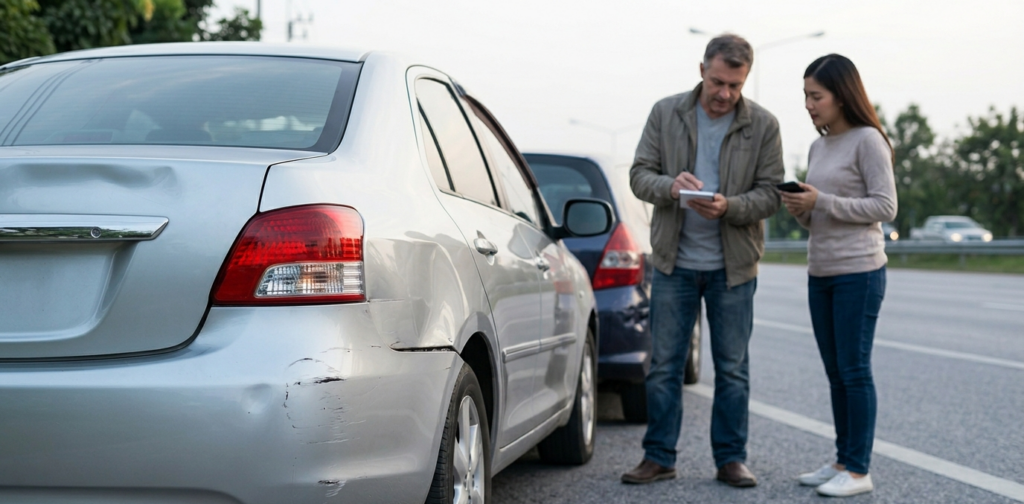
What Insurance Companies Consider a Minor Accident
Insurance companies classify accidents by severity. A minor accident is typically one with low damage, no injuries, and no police report. But minor from an insurance perspective is not the same as minor from a driver’s perspective.
Here is a table showing how insurers classify accident severity.
| Severity Level | Damage Amount | Injuries | Police Report | Typical Payout |
|---|---|---|---|---|
| Very minor | Under $500 | None | No | $0 – $500 |
| Minor | $500 – $2,000 | None or minor | Sometimes | $500 – $2,000 |
| Moderate | $2,000 – $10,000 | Minor to moderate | Usually | $2,000 – $10,000 |
| Major | $10,000+ | Moderate to severe | Yes | $10,000+ |
| Catastrophic | Total loss or near total | Severe | Yes | Policy limits |
The key insight is that an accident you consider minor may not be minor to your insurer. A bumper tap that causes $800 in hidden damage is a minor accident to your insurer. A fender bender with $1,500 in damage is a minor accident. Even an accident where you pay out of pocket and do not file a claim can still be recorded if the other driver files a claim against you.
Here are examples of minor accidents that matter.
A parking lot bump. You back into another car at low speed. The damage is a small scratch. The other driver files a claim. Your insurer pays $600. This is a minor accident.
A rear end tap. You are stopped at a light. The car behind you rolls into you. No visible damage. But the other driver’s bumper has a crack underneath. They file a claim. Your insurer pays $900. This is a minor accident.
A sideswipe. You change lanes and touch another car. Minor paint transfer. The other driver files a claim. Your insurer pays $500 for paint repair. This is a minor accident.
In each case, the accident seems minor to you. But to your insurer, it is a claim. And a claim is a claim, no matter the size.
How Minor Accidents Affect Your Future Claims
A minor accident can affect your future claims in several ways. Some effects are obvious. Others are hidden and only appear when you file a later claim.
The most direct effect is on your claims history. Every claim you file, no matter how small, goes on your record. Your insurer tracks your claims through the CLUE report (Comprehensive Loss Underwriting Exchange). Other insurers can see this report when you apply for coverage.
Here is a table showing how multiple minor claims affect your claims history.
| Number of Minor Claims in Past 3 Years | Risk Category | Impact on Future Claim |
|---|---|---|
| 0 | Preferred | Claim processed normally |
| 1 | Standard | Claim may be scrutinized |
| 2 | Elevated risk | Claim investigated more thoroughly |
| 3+ | High risk | Claim may be denied, policy may be non-renewed |
A single minor claim is not a big problem. Insurance companies understand that accidents happen. But multiple minor claims suggest a pattern. The adjuster may ask questions. They may investigate more thoroughly. They may assume that you are a higher risk driver.
Here is how a minor accident can affect a future claim. The adjuster sees that you have filed two minor claims in the past two years. Now you file a major claim. The adjuster may suspect that the major claim is related to the minor claims. They may investigate whether the damage was pre-existing. They may deny coverage for parts of the claim.
The second effect is on your premium. A minor claim can increase your rates. The increase may be small for a first minor claim, but it adds up. Multiple minor claims can increase your rates significantly.
Here is a table showing how minor claims affect premiums.
| Scenario | Typical Premium Increase | Duration | Total Extra Cost on $1,500 Premium |
|---|---|---|---|
| First minor claim, not at fault | 0-10% | 3 years | $0 – $450 |
| First minor claim, at fault | 20-30% | 3 years | $900 – $1,350 |
| Second minor claim, at fault | 30-45% | 3-5 years | $1,350 – $3,375 |
| Third minor claim, at fault | 50-75%+ | 5+ years | $3,750 – $5,625+ |
The third effect is on your ability to get insurance in the future. If you have too many minor claims, some insurers may refuse to cover you. You may be forced into a high risk pool, where coverage is much more expensive.
The CLUE Report: Your Hidden Driving Record
Most drivers know about their motor vehicle record, which shows tickets and violations. But few know about the CLUE report. CLUE stands for Comprehensive Loss Underwriting Exchange. It is a database of insurance claims.
Here is a table showing what appears on your CLUE report.
| Information | How Long It Stays |
|---|---|
| Date of accident | 5-7 years |
| Type of claim (collision, comprehensive, liability) | 5-7 years |
| Amount paid by insurer | 5-7 years |
| Who was at fault | 5-7 years |
| Injuries reported | 5-7 years |
| Police report number | 5-7 years |
The CLUE report is maintained by LexisNexis, a data company. Insurance companies report claims to CLUE. Other insurance companies check CLUE when you apply for coverage. If you have multiple minor claims on your CLUE report, new insurers may offer you higher rates or deny coverage entirely.
Here is how to check your CLUE report. You are entitled to one free report per year from LexisNexis. Go to their website and request your report. Review it for accuracy. If you see claims that are not yours or that are described incorrectly, dispute them.
Many drivers are surprised by what is on their CLUE report. That minor claim you thought was no big deal? It is there. That claim the other driver filed against you? It is there. That comprehensive claim from three years ago? It is still there.
When to File a Claim for a Minor Accident
Not every minor accident requires an insurance claim. In fact, for very minor accidents, filing a claim can cost you more in the long run than paying out of pocket.
Here is a table to help you decide whether to file a claim for a minor accident.
| Damage Amount | Your Deductible | Should You File? | Why |
|---|---|---|---|
| Under $500 | $500 | No | You pay anyway, claim raises rates |
| $500 – $750 | $500 | Probably not | Claim pays $0-$250, but rates may increase |
| $750 – $1,000 | $500 | Consider | Claim pays $250-$500, weigh premium increase |
| $1,000 – $1,500 | $500 | Probably yes | Claim pays $500-$1,000 |
| $1,500+ | $500 | Yes | Claim pays $1,000+ |
The math is simple. Your deductible is $500. The damage is $600. Filing a claim would pay you $100. But your premium might increase by $200 per year for three years, costing you $600. Filing the claim costs you $500 more than paying out of pocket.
Here is the rule of thumb. Pay out of pocket if the repair cost is less than two times your deductible. For a $500 deductible, that means paying out of pocket for repairs under $1,000. For a $1,000 deductible, pay out of pocket for repairs under $2,000.
Here are specific situations where you should not file a claim.
| Situation | Why Not to File |
|---|---|
| Damage is only cosmetic (scratches, small dents) | Repair cost is low, claim will raise rates |
| You can pay out of pocket without hardship | Cheaper than premium increase |
| You have had other claims recently | Multiple claims look bad |
| The other driver offers to pay directly | No claim, no record |
| Your deductible is higher than the repair cost | You get nothing, but rates may still increase |
Here are specific situations where you should file a claim.
| Situation | Why to File |
|---|---|
| Damage exceeds three times your deductible | Payout exceeds likely premium increase |
| There are injuries | Medical bills can be huge |
| The other driver disputes fault | You need your insurer’s help |
| You do not have the money to pay out of pocket | Better to pay higher premiums than go into debt |
How to Handle a Minor Accident When You Are Not at Fault
If you are not at fault for a minor accident, you have options. You can file a claim with the other driver’s insurance company. This is called a third party claim. You pay no deductible, and your rates should not increase because you were not at fault.
Here is a table comparing your options when you are not at fault.
| Option | You Pay Deductible? | Your Rates Increase? | Speed | Risk |
|---|---|---|---|---|
| File with other driver’s insurer | No | No | Slower | Other driver may dispute fault |
| File with your insurer (first party) | Yes | Possibly | Faster | You pay deductible upfront |
| Pay out of pocket and seek reimbursement | Yes (temporarily) | No | Slowest | Other driver may not pay |
The best option is usually to file with the other driver’s insurer. You pay no deductible. Your rates should not increase. However, the process can be slower because their insurer works for them, not for you.
If the other driver’s insurer is slow or denies fault, you can file with your own insurer. You pay your deductible, but your insurer may refund it later through subrogation. Your rates may increase even though you were not at fault. Some insurers increase rates for any claim, regardless of fault. Check with your insurer.
Here is what to do after a minor accident when you are not at fault.
First, document everything. Take photos. Get witness information. Call the police. Get a report.
Second, get the other driver’s insurance information. Take a photo of their insurance card.
Third, call the other driver’s insurer and file a claim. Be factual. Do not exaggerate. Provide your evidence.
Fourth, if the other driver’s insurer accepts fault, they will pay for your repairs. You pay nothing. Your rates should not increase.
Fifth, if the other driver’s insurer denies fault or delays, consider filing with your own insurer. But weigh the potential premium increase against the repair cost.
How Long Do Minor Accidents Stay on Your Record?
Minor accidents do not stay on your record forever. But they stay longer than most drivers think. The typical time is three to five years for a minor accident, depending on the state and the insurer.
Here is a table showing how long different types of accidents stay on your record.
| Accident Type | Typical Time on Record | Notes |
|---|---|---|
| Minor at fault accident, no injury | 3 years | Most insurers look back 3 years |
| Minor at fault accident, with injury | 3-5 years | Injuries extend the period |
| Major at fault accident | 5-7 years | More severe, longer impact |
| Not at fault accident | 0-3 years | Varies by insurer |
| Comprehensive claim (weather, theft) | 3 years | Often less impact |
| Glass claim | 3 years | Minor impact on rates |
After the time period passes, the accident falls off your record. It no longer affects your premiums or your ability to get insurance. But you cannot simply wait. During those three to five years, your rates will be higher.
Here is what you can do while you wait. Drive safely. Every year without a new accident improves your record. Take a defensive driving course. Some insurers offer discounts that can offset the premium increase. Shop around at every renewal. Different insurers weigh accidents differently. One insurer may charge you much less than another for the same accident history.
The Hidden Damage Problem in Minor Accidents
One of the biggest risks of minor accidents is hidden damage. You look at your car after a minor rear end collision. The bumper looks fine. No cracks. No dents. You decide not to file a claim. You drive away.
Months later, you are in another accident. This one is more serious. You file a claim. The adjuster inspects your car and finds old damage under the bumper. Crumpled absorber. Cracked reinforcement bar. They say this damage is from the previous accident, not the current one. They reduce your claim by the cost of repairing the pre-existing damage.
This is the hidden damage problem. Minor accidents can cause damage that is not visible to the naked eye. Bumpers are designed to absorb energy. Even a low speed impact can crush the foam absorber or crack the reinforcement bar. You cannot see this damage without removing the bumper cover.
Here is a table showing common hidden damage from minor accidents.
| Impact Type | Visible Damage | Hidden Damage |
|---|---|---|
| Rear end at 5 mph | None or small scuff | Crushed absorber, cracked reinforcement bar |
| Rear end at 10 mph | Small dent or crack | Bent frame rail, damaged exhaust |
| Side impact at 5 mph | None or small scratch | Damaged door beam, bent inner structure |
| Front impact at 5 mph | None or small crack | Crushed absorber, damaged radiator support |
Here is what you should do after any accident, no matter how minor. Get your car inspected by a qualified body shop. Ask them to remove the bumper cover and inspect the underlying structure. If there is hidden damage, get an estimate. Then decide whether to file a claim or pay out of pocket.
If you choose not to file a claim, keep the inspection report and photos of the hidden damage. If you have a future accident, you can prove that the hidden damage was pre-existing and not caused by the new accident.
Real Example: How a Minor Accident Cost a Driver $3,000
Let us walk through a real example to see how a minor accident can affect future claims. Meet Lisa. She is stopped at a stop sign. Another driver rolls into her at very low speed. Lisa gets out and looks at her bumper. She sees nothing. No dent. No scratch. The other driver offers to pay $200 for any damage. Lisa thinks that is unnecessary. She says it is fine and drives away. She does not file a claim. She does not get her car inspected.
Six months later, Lisa is in another accident. This time, she is rear ended at a stoplight at moderate speed. The damage is significant. She files a claim with the other driver’s insurer.
The adjuster inspects Lisa’s car. Under the bumper cover, they find a crushed absorber and a cracked reinforcement bar. The adjuster says this damage is from the previous accident, not the current one. They reduce her claim by $1,500 to account for the pre-existing damage.
Lisa also has whiplash from the second accident. She files a medical claim. The adjuster reviews her medical records and sees that she mentioned neck stiffness after the first accident. The adjuster argues that her whiplash is partially from the first accident. They reduce her injury claim by $1,500.
Total loss to Lisa from the minor accident: $3,000. Plus, the first accident is now on her record because the other driver filed a claim against her insurance. Her rates increase.
All of this because she did not get her car inspected after a minor accident.
How to Protect Yourself From Minor Accident Consequences
You cannot prevent every minor accident. But you can protect yourself from the long term consequences.
Here is a checklist of what to do after any accident, no matter how minor.
| Action | Why It Matters |
|---|---|
| Stop and exchange information | Required by law, documents the incident |
| Take photos of both cars | Captures damage, even if none visible |
| Call police | Creates official record |
| Get your car inspected | Reveals hidden damage |
| Get a repair estimate | Documents the cost |
| Keep all records | Proves pre-existing damage later |
| Decide whether to file claim | Weigh repair cost vs premium increase |
If you decide not to file a claim, get a written release from the other driver. The release should say that they accept the agreed payment and that they will not file a claim against you. Keep this release forever. It protects you if they change their mind later.
If the other driver offers to pay you directly, get the money before you sign anything. Accept cash, a cashier’s check, or a money order. Do not accept a personal check. Do not accept a promise to pay later.
If you are the at fault driver in a minor accident, consider paying out of pocket. Get a written estimate from a shop. Pay the other driver directly. Get a signed release. This keeps the accident off your insurance record.
The Bottom Line on How Minor Accidents Can Affect Future Claims
Minor accidents matter more than most drivers realize. They go on your CLUE report. They can increase your premiums. They can cause hidden damage that affects future claims. They can be used against you by adjusters in later accidents.
The best way to protect yourself is to treat every accident seriously, no matter how minor. Stop. Exchange information. Call police. Take photos. Get your car inspected. Document everything. Then make an informed decision about whether to file a claim.
If the repair cost is less than two times your deductible, pay out of pocket. You will save money on premiums in the long run. If the repair cost is higher, file a claim. But be prepared for the premium increase.
Keep records of every accident, even those you do not file claims for. Photos, estimates, police reports, and releases. If you have a future accident, these records prove what damage was pre-existing and what damage is new.
Minor accidents are frustrating. They feel like a waste of time. But how you handle them can save you thousands of dollars in the future. Take them seriously. Document everything. Make smart decisions. Your future self will thank you.